Between 18 months and 3 years, many children go from a handful of words to short sentences. It is an exciting time, and you play a big part in it. The best way to support toddler language isn’t flashcards or apps, it is the ordinary moments you already share every day.
How toddler language develops
Toddlers learn language by hearing it, again and again, in real situations. When you talk about what you are doing, name the things around you and respond to your child’s sounds and gestures, you are building the foundations for talking, listening and, later, reading.
Every child develops at their own pace. Some toddlers chatter early, while others understand much more than they can say for a while. Understanding usually comes before speaking, so your toddler may follow simple instructions well before they can use those words themselves.
You may also notice your toddler pointing, waving, babbling with expression or copying sounds. These are all important steps. Gestures and sounds are early forms of communication, and when you respond warmly, your child learns that their attempts to communicate are worth the effort.
Talking through the day
Everyday routines are full of chances to chat. Getting dressed, cooking, bath time and the walk to the car can all become small language lessons without any extra effort.
- Narrate what you are doing. “I’m cutting the apple. Now it’s in two pieces.”
- Follow your child’s interest. If they point at a dog, talk about the dog: its colour, its size, the sound it makes.
- Expand on their words. If your toddler says “car”, you might say “Yes, a big red car.”
- Leave pauses. Give your child time to respond, even if it is a sound or a gesture.
- Ask simple questions. “Where’s the ball?” or “Do you want milk or water?”
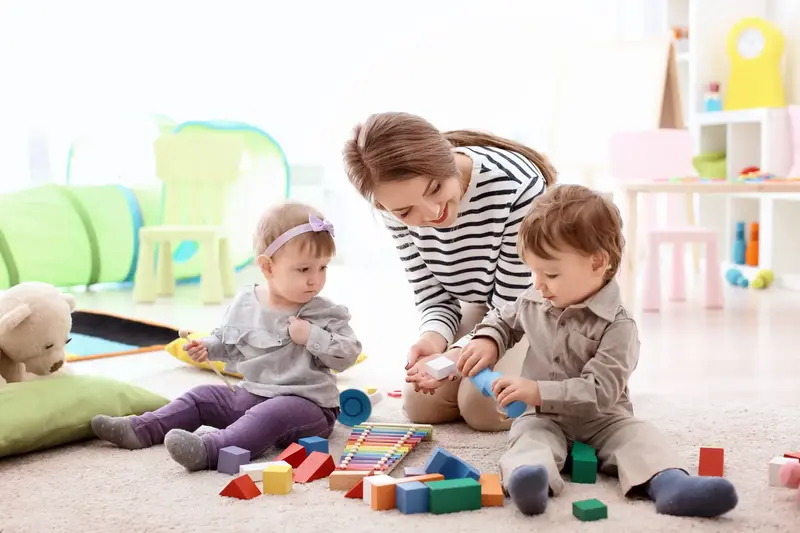
- Get down to their level. Face to face, your toddler can watch your mouth and expressions.
- Limit background noise. Turning off the TV makes it easier for toddlers to tune in to voices.

Reading and singing together
Sharing books every day is one of the most powerful things you can do for your child’s language. You don’t have to read every word. Talk about the pictures, let your toddler turn the pages and point to things, and don’t worry if you read the same favourite book over and over. Repetition helps children learn.
Songs, rhymes and finger plays are wonderful too. The rhythm and repetition help toddlers hear the sounds in words, and actions like clapping or wiggling fingers keep them engaged. Singing in the car, at bath time or while packing up toys turns routine moments into play. If your family speaks more than one language, use the language you are most comfortable in. Speaking your home language richly is a great gift for your child.
When to check in
Children’s language develops at different rates, but if something is worrying you, it is always okay to ask. Speak to your Maternal and Child Health (MCH) nurse or GP if you have concerns about how your toddler is understanding, talking or hearing. They can check in on your child’s development and refer you to further support if needed. Raising Children Network also has clear, practical information about language milestones.
Growing language in our Toddler room
In our Toddler room, conversation is part of everything we do. Our educators chat with children during play, meals and care routines, share stories and sing songs throughout the day. Our Reggio Emilia-inspired program encourages children to express their ideas in many ways, and our weekly incursions, including music, give toddlers even more chances to listen, move and join in.
If you would like to see how we support young children’s communication at our Keysborough centre, we would love to meet you. Book a tour or call our team on 03 9969 7057 for a chat.