

Learning to read starts long before a child opens a school reader. Every story you share, song you sing and chat you have in the car helps build reading readiness. The best part is that the most effective early literacy activities are simple, playful and fit easily into family life.
What reading readiness really means
Reading readiness is not about teaching your four year old to read before Prep. It is about building the foundations that make reading easier later on. These include a love of books, a rich vocabulary, an ear for the sounds in words, and an understanding that print carries meaning.
Children also need to know how books work: which way up to hold them, that we read from left to right, and that pictures and words tell a story together. These ideas grow naturally when children spend time with books and the adults who love them.
Make shared reading a daily habit
Reading together for even ten minutes a day is one of the most valuable things you can do. Let your child choose the book, even if it is the same one for the fifth night in a row. Repetition helps children remember words, predict what comes next and feel confident joining in.
As you read, pause to talk. Ask what they think will happen, how a character might be feeling, or what they would do. Point to words now and then, especially your child’s name or words that repeat on every page. Keep it relaxed. If your child wants to wriggle, act out the story or stop halfway, that is fine.
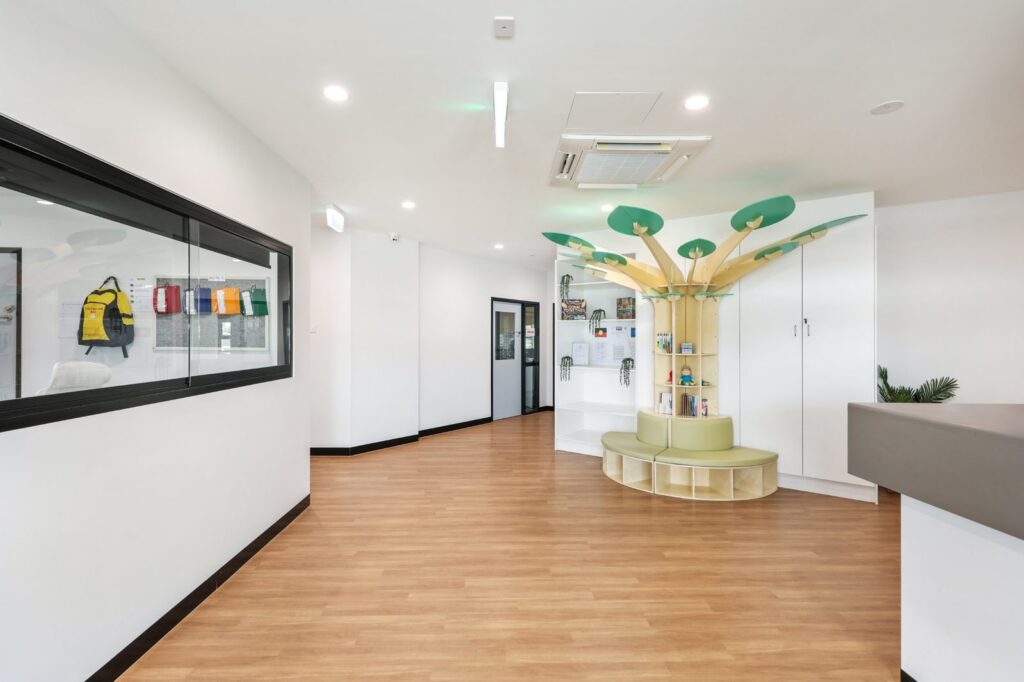
Playful early literacy activities to try at home
Literacy learning can happen anywhere, from the kitchen bench to the supermarket aisle. Here are some easy ideas:
- Sing nursery rhymes and silly songs, and leave out the rhyming word for your child to fill in.
- Play “I spy” using first sounds, such as “something that starts with mmm”.
- Clap out the beats in names and words, like Ma-til-da or ba-na-na.
- Point out letters and words on signs, cereal boxes and shopfronts.
- Make a simple shopping list together and let your child tick items off.
- Write your child’s name with chalk, in sand or with a finger in flour.
- Tell stories without a book, taking turns to add the next part.
Drawing and scribbling count too. When children draw a picture and tell you about it, they are practising the idea that marks on paper can share a message. You can write their words underneath so they see their own ideas in print.
Building language through everyday conversation
Strong spoken language is the base for reading. Talk with your child throughout the day about what you are doing, what you can see and what happened earlier. Use interesting words, and explain new ones as you go. Words like “enormous”, “curious” and “disappointed” give children more ways to describe their world.
Try to ask open questions that need more than a yes or no, such as “What was the best part of your day?” Then give them time to answer. If your child speaks a language other than English at home, keep using it. A strong first language supports learning in English, too.
If you have questions about your child’s speech or language development, your Maternal and Child Health nurse or GP is a good first contact. The Raising Children Network also has helpful guides for families.
How we nurture early literacy at Nest
In our Kindergarten room, literacy is woven through play. Children explore stories, songs, mark-making and conversations every day, guided by our bachelor-qualified teachers and our Reggio Emilia-inspired approach. Our school readiness program builds on these skills so children head to Prep feeling curious and capable.
If you are looking for a funded 4 year old kinder program in Keysborough, we would love to meet you. Book a tour or call our team on 03 9969 7057 for a chat.


