

Sleep is often the number one worry for parents when a baby starts care. Will they nap? Will they settle without you? When it comes to baby sleep at childcare, our approach is simple: we follow the routine your baby already has at home and use safe sleep practice every time they rest.
Why we follow your baby’s sleep routine
Babies in our Nursery range from 6 weeks to 18 months, and their sleep needs are very different across that age range. A young baby may need several short naps, while an older baby might have moved to one or two. Rather than putting every baby on the same schedule, our educators follow each baby’s own sleep pattern and watch for their tired signs.
Before your baby starts, we’ll ask about when they usually sleep, how long for, and what helps them settle. Do they like a song, a gentle pat or a comforter? The more you share, the more familiar rest time will feel for them. Bed linen is included, so you don’t need to bring sheets.
Safe sleep practice for babies
Red Nose is Australia’s leading authority on safe sleep, and its guidelines are a great resource for every parent. Key messages include:
- Always place your baby on their back to sleep, from birth.
- Keep your baby’s head and face uncovered.
- Keep your baby smoke-free before and after birth.
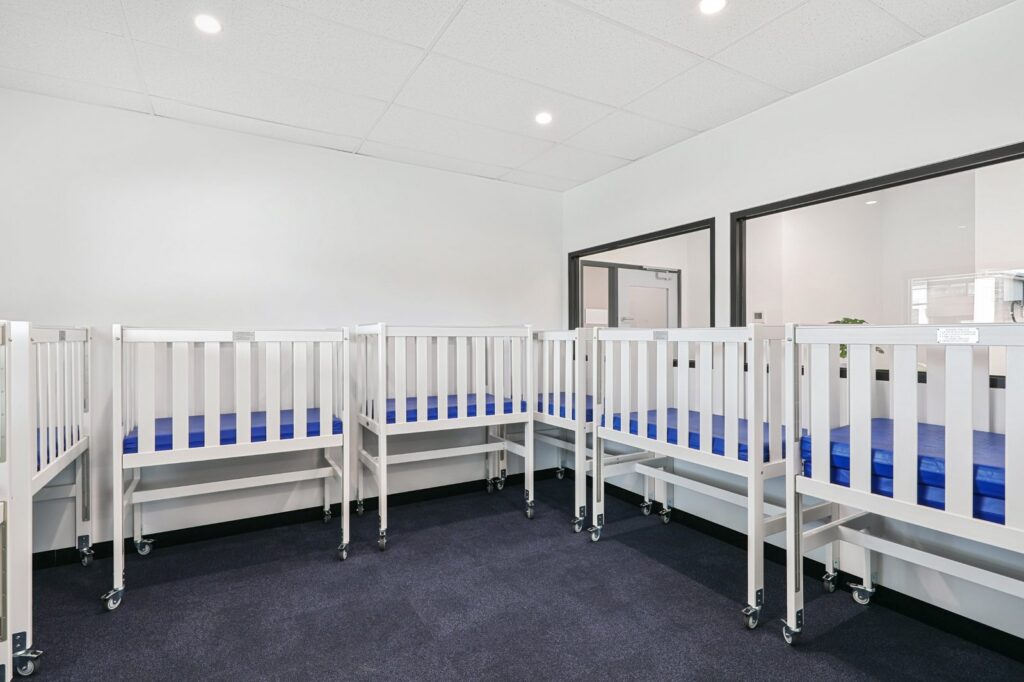
- Provide a safe sleeping environment night and day, with a safe cot, a firm, flat mattress and no pillows, bumpers or soft toys.
- Sleep your baby in a safe cot in your room for the first six to twelve months.
- Breastfeed your baby, if you can.
Our educators follow safe sleep practice whenever babies rest, and regularly check on sleeping babies. Babies are placed on their backs to sleep, with their faces uncovered, and we work with you if your baby has particular sleep needs. If you have questions about safe sleep at home, the Red Nose website and your Maternal and Child Health (MCH) nurse are excellent places to start.
Tips to help your baby settle for naps at childcare
- Tell us about any recent changes, such as a rough night, a new tooth coming through or a dropped nap.
- Let us know your baby’s tired signs, whether that’s rubbing eyes, yawning, grizzling or staring into space.
- Share the words, songs or sounds you use at bedtime so educators can use them too.
- Bring a familiar comforter if your baby uses one at home and it’s safe for their age.
- Try to keep sleep times similar on days at home and days in care while your baby is settling in.
- Be patient in the first few weeks. Shorter naps are common in a new place and usually improve as your baby feels at home.
- Keep pick-up times as predictable as you can, so the end of the day feels familiar too.
Keeping you in the loop
It helps to know how your baby slept so you can plan the evening. Through our parent app, you’ll get daily updates that include sleep times, along with feeds, nappy changes and play. If your baby had a shorter nap than usual, you’ll know before pick-up and can plan an earlier bedtime if needed.
Our orientation sessions are also a chance to talk through your baby’s sleep routine with our team before their first day, so everyone is on the same page. You can also check our what to pack guide to see what to bring for rest time.
Rest and comfort in our Nursery
Every baby is different, and good sleep starts with educators who know your baby well. In our Keysborough Nursery, we work alongside you to keep your baby’s routine consistent and their rest safe and calm. If you’d like to talk about how sleep would work for your baby, book a tour or call us on 03 9969 7057. We’re always happy to answer your questions.


