

Starting solids is an exciting milestone, and it can also feel like a lot to figure out. When should you begin, what should you offer, and what if your baby isn’t interested? Here’s a gentle, practical guide to starting solids and making mealtimes a happy part of your baby’s day.
When to start solids
Australian guidelines recommend introducing solid foods at around 6 months, when your baby shows signs of being ready. Breastmilk or formula remains your baby’s main source of nutrition through the first year, so early solids are about exploring new tastes and textures as much as filling tummies. There is no need to rush. Some babies take to solids straight away, while others need a few weeks to get the hang of it.
Signs your baby may be ready include:
- Good head and neck control, and sitting upright with support.
- Showing interest in food, such as watching you eat or reaching for your plate.
- Opening their mouth when food comes near.
- No longer pushing food straight back out with their tongue.
Every baby is different. If you’re unsure whether your baby is ready, or they were born early or have any health concerns, talk to your Maternal and Child Health (MCH) nurse or GP before you start.
First foods and textures
Iron-rich foods are important around this age, so many families begin with options such as iron-fortified baby cereal, well-cooked and mashed meat, chicken, fish, tofu or legumes. From there, you can gradually add vegetables, fruits and grains. Moving from smooth to mashed, then to soft finger foods, helps your baby learn to chew and manage different textures. Try to move on to lumpier textures gradually rather than staying with smooth purees for too long, as this is an important part of learning to eat.
Current Australian advice is also to include common allergy foods, such as egg and peanut, in your baby’s diet during the first year. If your baby has eczema, an existing food allergy or a family history of allergy, check with your GP or MCH nurse first. Raising Children Network has clear, reliable information on starting solids and allergies too.
Practical tips for happy mealtimes
- Choose a time when your baby is alert and not overly hungry or tired.
- Start with a small amount, even just a teaspoon or two, and follow your baby’s lead.
- Offer a new food several times. It can take many tries before a baby accepts a new taste.
- Let your baby touch, squish and explore. Mess is part of learning.
- Sit together and eat with your baby when you can, so they see you enjoying food.
- Always stay with your baby while they eat, and make sure they’re sitting upright.
- Offer small sips of water from a cup with meals once your baby has started solids.
- Avoid adding salt, sugar or honey. Honey isn’t recommended for babies under 12 months.
Mealtimes in our Nursery
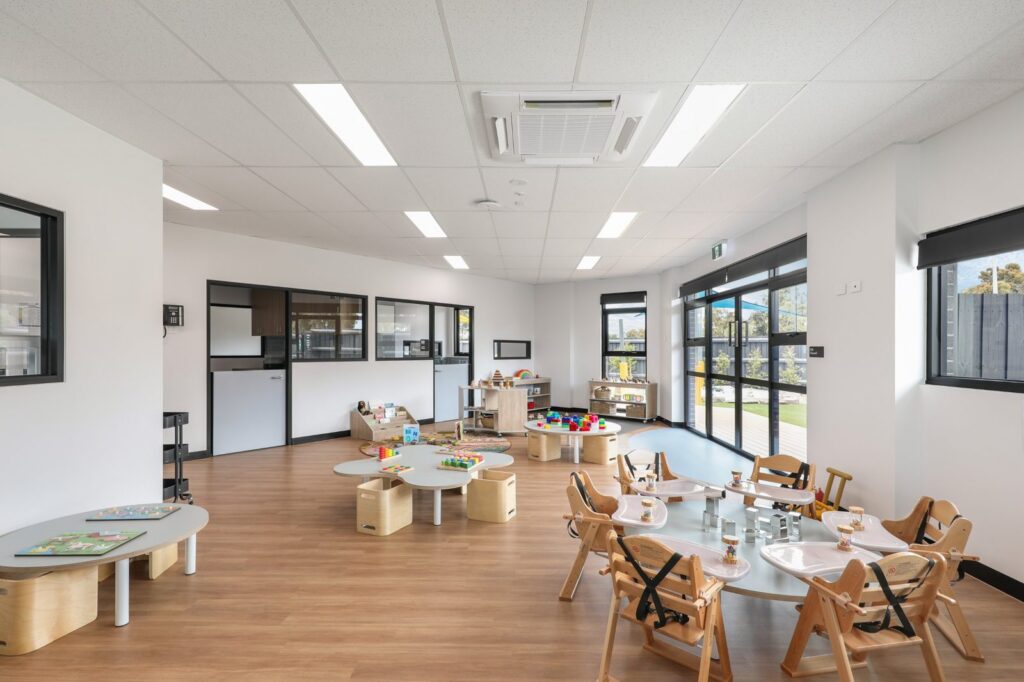
Our on-site chef prepares breakfast, morning tea, lunch, afternoon tea and a late snack every day, with culturally diverse, allergy-aware menus. For babies in our Nursery, our educators work with you to understand where your baby is up to with solids, which foods they’ve tried and anything they need to avoid. You can find more detail on our nutrition page.
Mealtimes are relaxed and social. Older babies sit together with educators, who chat about the food, encourage little hands to explore and let each baby eat at their own pace. Through the parent app, you’ll see what your baby ate each day, which helps you plan meals at home.
Let’s talk about your baby’s mealtimes
Starting solids is a journey you’ll take one spoonful at a time, and you don’t have to do it alone. If your baby is about to start care at our Keysborough centre, we’d love to hear about their feeding routine and any allergies or preferences. Book a tour or call our team on 03 9969 7057 for a chat.


